
Languages: sell in five
The storefront speaks five languages — English, Français, Deutsch, Español and Nederlands. Buyers switch for themselves; your own words can follow them.
What buyers see
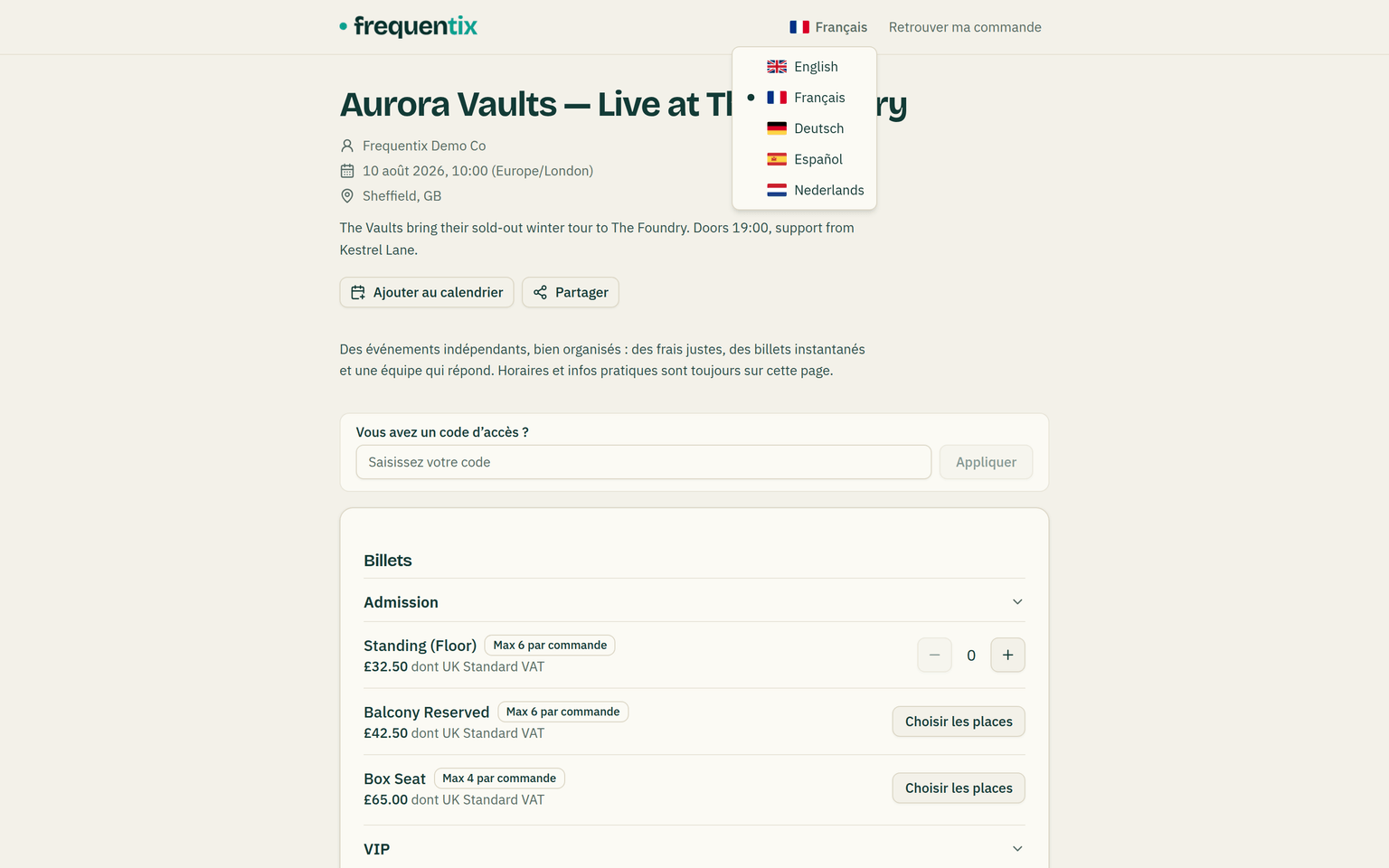
- A language switcher sits in the storefront header on every page. Switching keeps the buyer exactly where they were — only the language changes.
- Each language has its own web addresses: English pages live at the plain URL, the others under
/fr,/de,/esand/nl— so a French link you share opens in French. - Dates and weekdays render in the buyer’s language, always in the event’s timezone — a Berlin buyer sees “Samstag”, but never a shifted curtain time.
What’s translated, and by whom
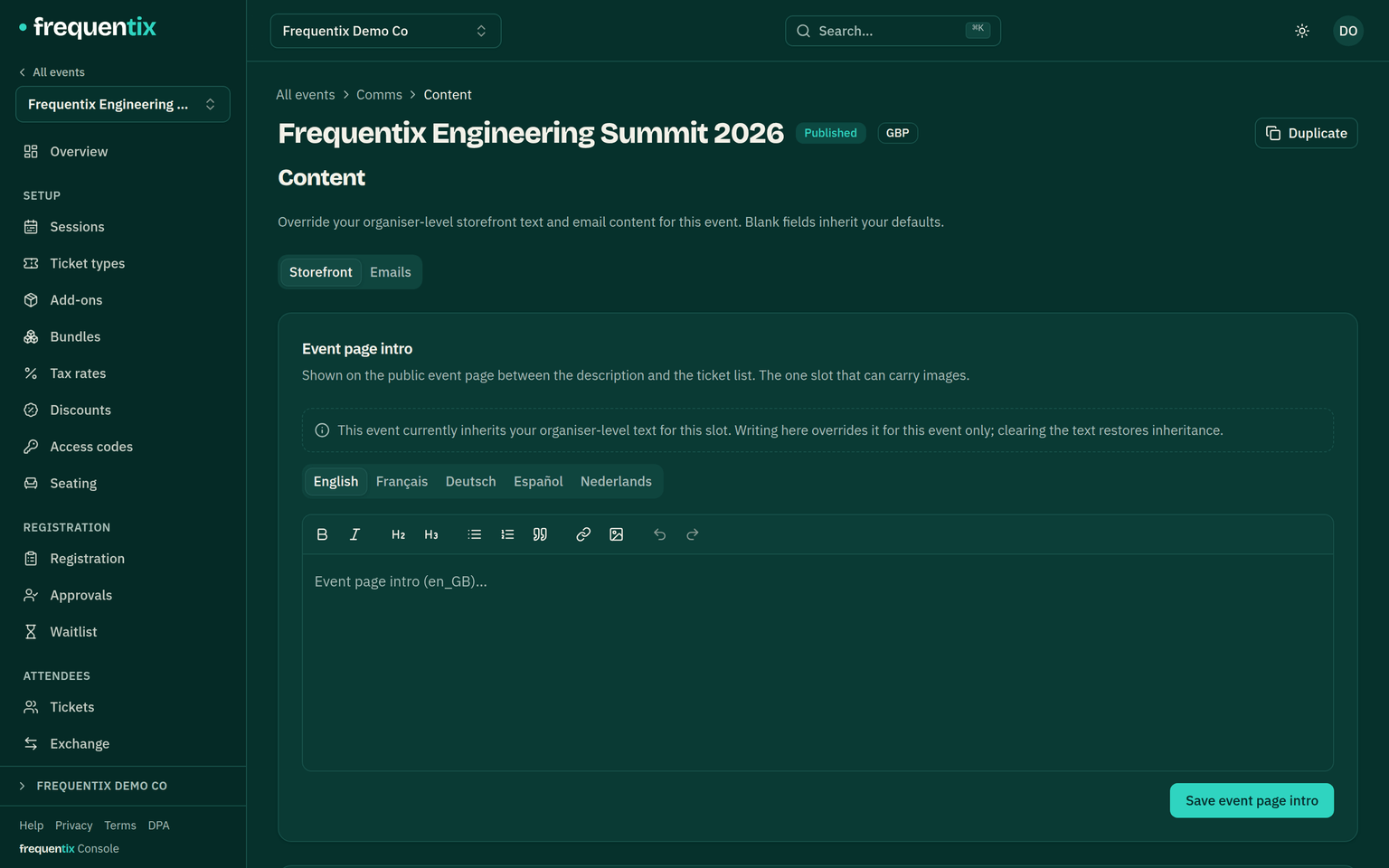
Everything frequentix authors — checkout, buttons, error messages, order statuses, the seat picker — is translated in all five languages, on every plan. Everything you author — the event description, storefront content slots and email wording — is yours to write per language: the console shows a tab per language on each field, and a language you leave blank inherits your default, so nothing ever renders empty. Writing one language is fine; writing five is possible.
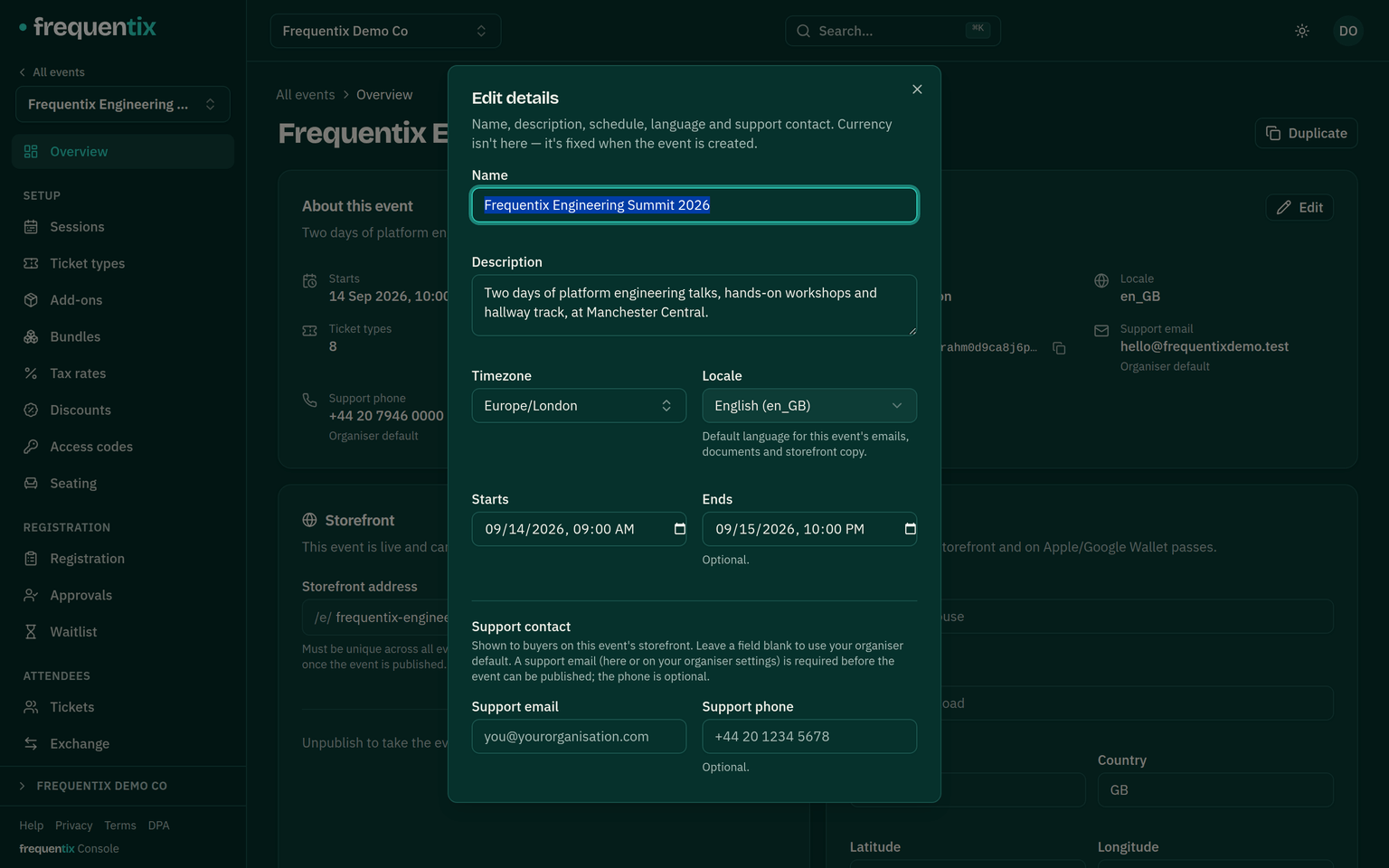
That default is itself a per-event choice. Each event carries a Locale — the language it leads with — and you set it on the event’s overview page: Edit opens Edit details, where Locale sits beside the timezone. It decides the language the event’s emails and documents go out in, and which of your own wording the storefront falls back to, whenever the buyer hasn’t said otherwise — someone who switches language, or who bought in one, gets theirs instead. A new event starts on your account’s default. What it doesn’t do is translate anything for you: your event name and ticket wording stay exactly as you typed them.
Emails & documents
- Order emails send in the language the buyer bought in — it is recorded on the order, so a confirmation resent months later still arrives in the right one.
- An issued invoice or receipt keeps its language forever, like everything else about it — a frozen document doesn’t re-translate.
Embeds
An embedded checkout shows no switcher — it inherits your page, and your page has a language. The embed snippet pins it (data-locale="fr"), so a French site embeds a French checkout.